Cloud Engineering Intern
I spent four weeks on Ejada's Cloud Build track, moving from Oracle Cloud Infrastructure and Terraform foundations through secure networking and Oracle Kubernetes Engine to a team-built e-commerce delivery pipeline with Helm, GitHub Actions, and ArgoCD. The first three weeks were individual labs in my own OCI compartment; week four was a group capstone built collaboratively in a shared compartment and GitHub organisation.

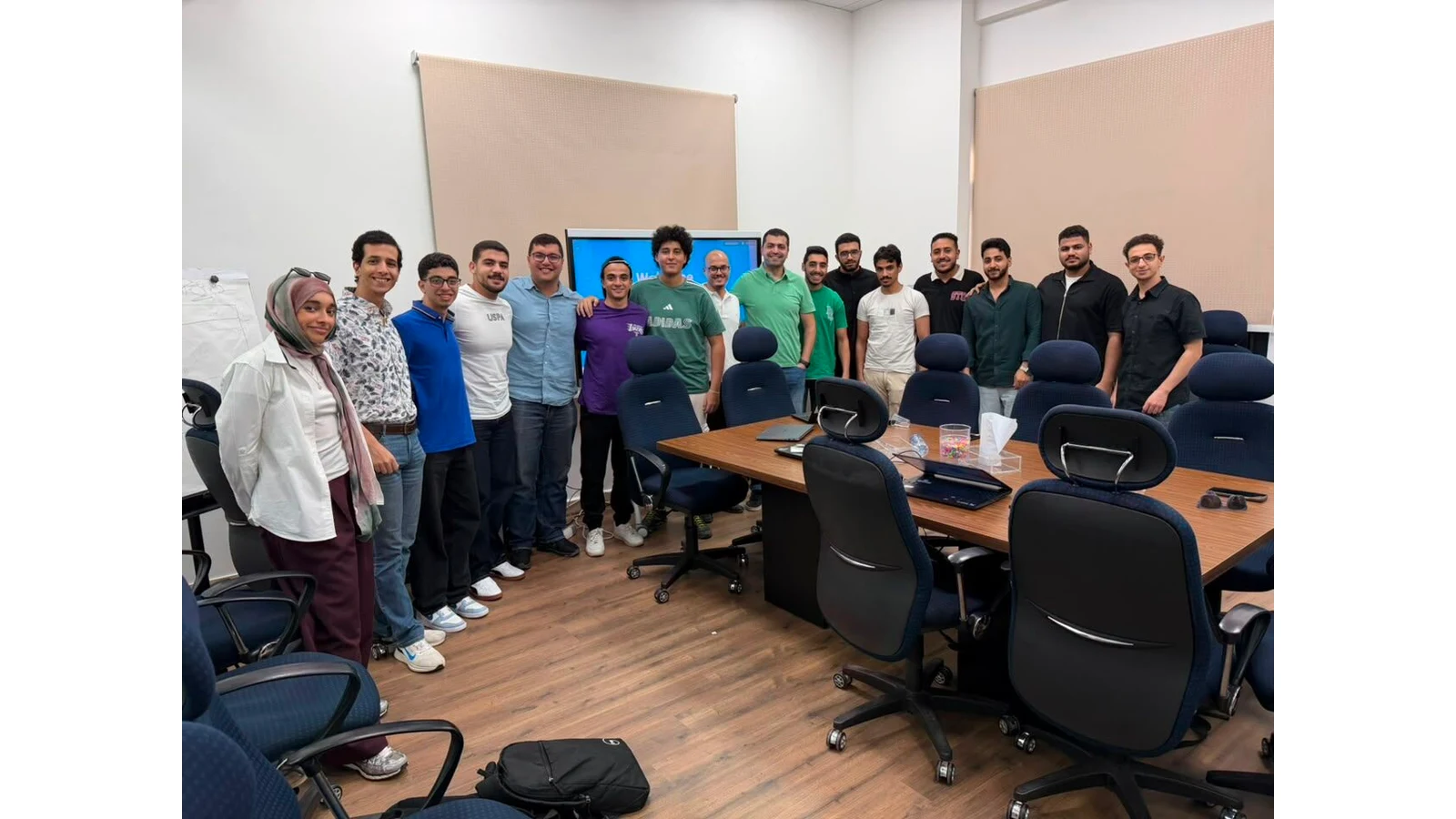
Four Weeks:
Individual cloud engineering labs
- Built OCI networking, compute, block storage, and File Storage manually, then reproduced and extended the environment with Terraform
- Designed a two-tier OCI network with a public Application Load Balancer, private compute, NAT, Bastion access, and internal NFS storage
- Created reusable Terraform modules for an OKE environment and deployed a stateful Nginx workload with OCI block-volume storage
- Verified each environment through runtime evidence and removed cloud resources in dependency order to control shared programme costs
Group A capstone
- Contributed to an e-commerce system spanning four Node.js microservices, a Next.js frontend, MongoDB, and OCI-hosted Kubernetes infrastructure
- Worked with Terraform, Helm, OCIR, GitHub Actions, NGINX Ingress, cert-manager, and ArgoCD across the delivery path
- Documented integration fixes and production-readiness gaps, including authorization, payment confirmation, secret management, database resilience, and the absence of automated tests
Completed Work
OCI infrastructure and secure network design
Progressed from a basic public VCN and compute deployment to a two-tier architecture where the load balancer was the only public application entry point and the instance remained private.
- Built with
- OCI, Terraform, Linux, Bastion, File Storage
- Contribution
- Built the first three weeks' environments individually, first exploring the resources in the OCI Console and then expressing them as repeatable Terraform configurations.
- Outcome
- Verified compute, storage, load-balancer routing, private access, and controlled teardown in the assigned OCI compartment.
Reusable OKE deployment
An Oracle Kubernetes Engine environment built from reusable subnet and cluster modules, with VCN-native pod networking, a managed worker pool, public load-balancer exposure, and persistent OCI block storage.
- Built with
- OKE, Kubernetes, Terraform modules, Nginx, OCI Block Volumes
- Contribution
- Provisioned the environment, deployed and debugged the workload, destroyed it to control cost, and recreated it from the same code the following day.
- Outcome
- A browser-reachable stateful application reproduced in two independent infrastructure cycles.
E-commerce modernization capstone
I was part of Group A. We started with an existing e-commerce project previously built by one of our teammates, then worked together to modernize it across four Node.js services, a Next.js frontend, MongoDB, Terraform-provisioned OCI networking and OKE, Helm packaging, and GitOps delivery through ArgoCD.
- Built with
- Node.js, Next.js, MongoDB, Helm, GitHub Actions, ArgoCD
- Contribution
- Owned the complete project documentation, covering the existing and target architecture, application and infrastructure components, testing and validation, CI/CD and GitOps flows, integration troubleshooting, security review, known limitations, and final handover material.
- Outcome
- A documented source-to-cluster system where application pushes built multi-architecture images, updated Helm state, and triggered ArgoCD reconciliation, with the architecture, verification evidence, problems, and remaining risks captured in one technical record.
Technical Stack
Cloud and infrastructure
Oracle Cloud Infrastructure, Terraform, Linux administration, Cloud networking, Cost governance
Containers and delivery
Docker, Kubernetes, OKE, Helm, GitHub Actions, ArgoCD, GitOps
OCI services
VCN, Compute, Load Balancer, Bastion, File Storage, Block Volumes, Object Storage, OCIR
Cloud Build Track
Week 1: OCI and Terraform foundations
Built compute, networking, and storage manually, then automated the same dependency chain and diagnosed a compartment-scope authorization failure.
Week 2: Secure two-tier networking
Moved the application instance into a private subnet behind a public load balancer, with NAT, Bastion, and File Storage supporting controlled access.
Week 3: Kubernetes on OKE
Introduced reusable Terraform modules, deployed a persistent workload, and resolved worker-image, container-image, and storage-aware rollout failures.
Week 4: Team capstone and GitOps
Integrated application repositories, OCI infrastructure, Helm, CI workflows, ingress, TLS automation, and ArgoCD into one collaborative delivery system.
Problems & Handling
The first Terraform apply returned an OCI authorization-style error.
Authentication was valid, but the configuration targeted the shared parent compartment rather than the assigned leaf compartment where resource management was permitted.
Verified the authentication chain and requested scope separately, then passed the correct assigned compartment OCID to the resources.
The subsequent Terraform apply completed successfully.
A Kubernetes replacement pod could not attach the existing ReadWriteOnce block volume while the previous pod still held it.
The default rolling update strategy conflicted with the storage access mode of the single-replica stateful workload.
Changed the Deployment strategy to Recreate so the old pod released the volume before its replacement started.
The rollout completed and the storage-backed application returned to a healthy state.
The capstone crossed several architecture and dependency boundaries during integration.
ARM64 builds, registry authentication, probe timing, OCI load-balancer annotations, remote Terraform state, TLS, and workflow order each failed at a different layer.
Used runtime evidence to isolate each layer, then applied targeted fixes including multi-architecture images, permanent OCI auth tokens, adjusted probes, injected subnet metadata, remote Object Storage state, cert-manager, and corrected workflow ordering.
The team established an automated application and infrastructure delivery path while recording its remaining limitations.
Summary
- Programme length
- 4 weeks (Aug – Sep 2026)
- Individual lab phases
- 3
- Capstone application repositories
- 5
- Primary cloud region
- Saudi Arabia West (Jeddah)
- The OKE environment was built, verified, destroyed, and successfully recreated from the same code in a second independent cycle.
- The project documentation separates individual work from the collaborative capstone and records known security, resilience, and completeness gaps rather than presenting the demo as production-ready.